Millwright Test Questions and Answers PDF: A Comprehensive Study Plan
Essential preparation resources, including exam questions, study notes, and flashcards, are available in PDF format to help you confidently pass your millwright certification exam.
Millwrights are highly skilled tradespeople specializing in the installation, maintenance, and repair of stationary industrial machinery. This demanding role requires a strong foundation in mechanical aptitude, mathematics, and problem-solving. Certification, like the Red Seal, validates competency and opens doors to advanced opportunities.
Preparation for millwright assessments often involves studying crankshaft, camshaft, and turbocharger components. Familiarity with measurement tools, alignment techniques, and safety regulations is crucial. Successful candidates demonstrate proficiency in interpreting blueprints and applying practical math skills. Resources like exam question PDFs, flashcards, and video tutorials are invaluable for mastering the necessary knowledge base and achieving certification success.
Understanding the Millwright Apprentice Exam Format
The millwright apprentice exam typically encompasses mathematics, spatial aptitude, mechanical aptitude, and abstract reasoning. Expect multiple-choice questions, potentially short answer components, and practical assessments. Content frequently includes identifying crankshaft and camshaft components, reading micrometers, and basic English/physics concepts mirroring a high school curriculum.
Preparation materials, often available as PDFs, focus on these core areas. Success hinges on understanding alignment charting, tolerance calculations, and proper gasket removal techniques. Familiarizing yourself with exam bank questions and utilizing study resources significantly increases your chances of passing this crucial step towards a rewarding apprenticeship.
Mathematics Skills Assessed in the Millwright Test
The millwright test heavily emphasizes mathematical proficiency. Expect questions covering fundamental arithmetic – addition, subtraction, multiplication, and division – alongside fractions, decimals, and percentages. Geometry, particularly calculating areas and volumes, is also crucial. Practical application is key; you’ll need to solve problems related to measurements and tolerances.
Study materials, often found in PDF format, should focus on reinforcing these core concepts. High school-level math forms the foundation, so a strong grasp of these principles is essential for success. Mastering these skills will enable accurate calculations in real-world millwright scenarios.
Practical Math Applications for Millwrights
Millwrights frequently utilize practical math skills daily. The exam assesses your ability to read and interpret measurement tools like micrometers and tapes accurately. Calculating tolerances and fits is paramount for ensuring proper equipment function and preventing failures. Expect questions involving conversions between units – inches to millimeters, for example.
PDF study guides should include practice problems focused on these applications. Understanding how to chart alignment readings and interpret indicator measurements is vital. Mastering these skills translates directly to on-the-job performance and safe, efficient work practices.
Reading and Interpreting Measurement Tools
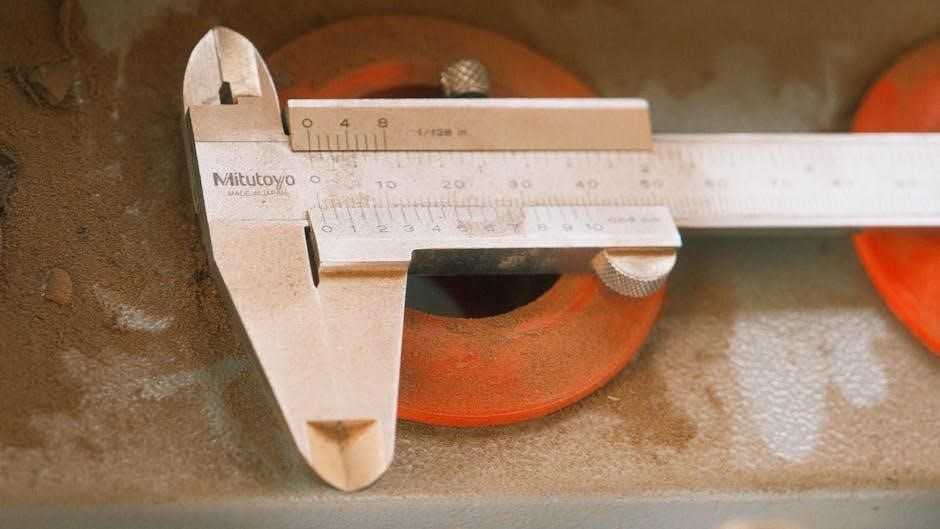
Proficiency in reading measurement tools is crucial for millwrights. The millwright test specifically includes questions on reading a micrometer, a fundamental skill for precise measurements. PDF study materials should dedicate significant space to practicing micrometer readings, including both metric and imperial scales.
Beyond micrometers, understanding calipers, dial indicators, and tape measures is essential. Practice interpreting these tools accurately, focusing on fractional and decimal values. Mastering these skills ensures correct alignment, proper fits, and overall equipment reliability, directly impacting job performance.
Calculating Tolerances and Fits
Understanding tolerances and fits is paramount in millwright work, and a key component of the certification exam. PDF study guides must include detailed explanations and practice problems covering interference fits, clearance fits, and transition fits; Applicants should be able to calculate tolerances based on given specifications and interpret engineering drawings accurately.
The exam assesses the ability to determine acceptable variations in dimensions. Mastering these calculations ensures proper component assembly and functionality, preventing premature wear or equipment failure. Focus on practical applications relevant to crankshafts, camshafts, and bearing installations.
Industrial Equipment Knowledge: Core Concepts
A comprehensive PDF study guide for the millwright test must cover core industrial equipment. Expect questions on crankshaft and camshaft components – labels, functions, and associated terminology. Turbocharger operation and maintenance are also frequently assessed, including understanding their role in engine performance and troubleshooting common issues.
Applicants should demonstrate knowledge of how these components interact within larger systems. Familiarity with reading micrometers and interpreting technical drawings related to these machines is crucial for success on the exam and in the field.

Crankshaft Components and Functions
Millwright test preparation PDFs heavily emphasize crankshaft knowledge. Expect questions identifying key components like main bearings, connecting rod journals, and counterweights. Understanding their individual functions – supporting rotating parts, transmitting power, and balancing the rotating assembly – is vital.
The exam may assess your ability to diagnose issues related to crankshaft wear or damage. Knowing how to interpret indicator readings to identify misalignment or bearing failure impacting the crankshaft is also essential. Detailed diagrams and labeling exercises are common.
Camshaft Components and Functions
Millwright apprenticeship exams frequently test knowledge of camshaft components. Expect questions covering lobes, bearings, and the camshaft itself. Understanding how these parts work together to control valve timing is crucial. The exam will likely assess your ability to identify functions like opening and closing intake/exhaust valves.
Preparation materials emphasize recognizing wear patterns and potential failure points. Questions may involve interpreting diagrams and understanding the impact of camshaft issues on engine performance. Familiarity with camshaft labeling and its role within the engine is key.

Turbocharger Operation and Maintenance
Millwright test preparation must include turbocharger fundamentals. Expect questions on components like the turbine and compressor wheels, as well as the central housing. Understanding how exhaust gases drive the turbine, increasing intake air pressure, is vital. Maintenance aspects, such as lubrication and inspecting for wear, are frequently assessed.
The exam may present scenarios requiring you to diagnose common turbocharger issues. Familiarize yourself with potential failure modes and their impact on engine performance. Knowing proper inspection procedures and identifying necessary repairs is crucial for success.

Alignment Techniques and Tools
Mastering alignment is critical for millwrights, and the test reflects this. Expect questions on precision alignment methods for shafts, couplings, and bearings. Understanding the use of dial indicators, laser alignment tools, and feeler gauges is essential. Charting alignment accurately, interpreting indicator readings, and recognizing acceptable tolerances are key skills assessed.
The exam will likely cover identifying wear patterns on bearings and shafts, indicating misalignment or damage. Knowledge of shimming techniques and coupling adjustments is also important. Practice interpreting alignment graphs and applying corrective measures to achieve optimal performance.
Charting Alignment and Indicator Readings
Accurate charting is fundamental to successful alignment. The millwright test will assess your ability to create and interpret alignment graphs. These charts are typically divided into thousandths of an inch vertically for indicator readings and whole inches horizontally for measurement locations. You’ll need to understand how to plot readings from dial indicators at multiple points around rotating equipment.
Expect questions on identifying high and low spots, calculating total indicator readings (TIR), and determining the necessary adjustments to achieve proper alignment. Proficiency in reading and applying these charts is crucial for minimizing vibration and extending equipment life.
Identifying Wear Patterns in Bearings and Shafts
A critical aspect of millwright work is diagnosing equipment issues through wear pattern analysis. The exam will likely present scenarios requiring you to identify abnormal wear on bearings and shafts. Unusual wear tracks indicate misalignment, improper lubrication, or excessive loading. Look for scoring, pitting, or discoloration as key indicators.
Understanding how different failure modes manifest visually is essential. Questions may focus on correlating wear patterns with potential causes, enabling you to recommend appropriate repairs or replacements. Recognizing these patterns prevents catastrophic failures and ensures operational efficiency.
Sealing Surfaces and Gasket Removal
Proper gasket removal is crucial for maintaining sealing integrity and preventing future leaks. The millwright test assesses your knowledge of appropriate techniques, emphasizing the use of a sharpened brass putty knife for stubborn materials. Avoid damaging the sealing surfaces during removal, as this compromises the new gasket’s effectiveness.
Questions may cover identifying seal alignment issues, which contribute to gasket failure. Understanding the importance of clean, smooth surfaces is paramount. Incorrect removal can lead to costly repairs and downtime, so mastering this skill is vital for a successful millwright.
Proper Gasket Removal Techniques
Effective gasket removal demands precision and the right tools. The millwright exam will likely test your understanding of utilizing a sharpened brass putty knife to carefully lift and scrape away gasket material from sealing surfaces. Avoid using excessive force or metallic scrapers, as these can cause damage.
Thorough cleaning of the surfaces after removal is essential, ensuring no residue remains. Questions may focus on identifying appropriate solvents for different gasket types. Mastering these techniques prevents leaks and ensures proper sealing during reassembly, demonstrating a core millwright skill.
Identifying Seal Alignment Issues
Recognizing misalignment in seals is crucial for preventing failures and maintaining equipment integrity. The millwright test may present scenarios where unusual wear tracks indicate improper alignment or excessive wear on bearings and shafts. Careful visual inspection is key; look for uneven wear patterns or scoring on sealing surfaces.
Understanding that a poorly aligned seal leads to premature failure and potential leaks is vital. Questions could assess your ability to diagnose these issues and recommend corrective actions, demonstrating a practical understanding of rotating equipment maintenance.
Hand Tools and Power Tools Used by Millwrights
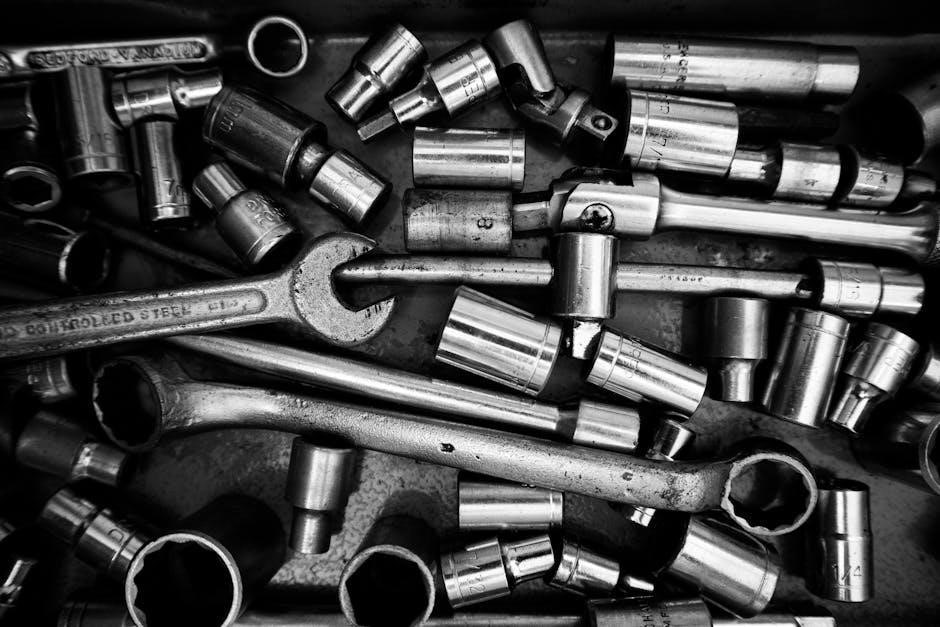
Millwrights utilize a diverse range of tools, and the exam will likely assess your familiarity with them. Expect questions regarding proper tool selection for specific tasks, including wrenches, sockets, micrometers, and alignment tools. Knowledge of power tools – grinders, cutting torches, and hydraulic jacks – is also essential.
Understanding safe operating procedures for each tool is paramount. The test may include scenarios requiring you to identify the correct tool for a job and demonstrate awareness of potential hazards. Proficiency with measurement tools, like tapes and calipers, is frequently tested.
Safety Procedures and Regulations for Millwrights
A significant portion of the millwright exam focuses on safety protocols. Expect questions covering Lockout/Tagout procedures, proper use of Personal Protective Equipment (PPE), and hazard identification. Understanding confined space entry regulations and fall protection is crucial.
The exam will likely assess your knowledge of safe rigging practices, including sling angles and load capacity calculations. Familiarity with workplace safety standards, such as those set by OSHA, is essential. Demonstrating a commitment to safe work habits is paramount for success on the test and in the field.
Red Seal Millwright Certification: Requirements and Preparation
To achieve Red Seal certification, comprehensive preparation is key. Resources include detailed study notes, extensive exam bank questions with verified answers, and interactive flashcards designed for efficient learning. Video tutorials further enhance understanding of complex concepts.
A high pass rate (reportedly 92%) is claimed with a money-back guarantee, indicating effective study materials. Focus on mastering practical skills and theoretical knowledge. Thoroughly review crankshaft, camshaft, and turbocharger components, alongside measurement tool proficiency. Dedicated study will significantly increase your chances of success.
Exam Bank Questions and Study Materials
Access a robust collection of exam bank questions, meticulously crafted to mirror the Red Seal Millwright exam’s difficulty and scope. These materials cover crucial areas like mathematics, industrial equipment (crankshafts, camshafts, turbochargers), and alignment techniques.
Study materials often include detailed answer explanations, aiding comprehension and reinforcing learning. Practice identifying unusual wear patterns and mastering gasket removal procedures. Supplement these resources with flashcards and video tutorials for a comprehensive review, maximizing your preparedness and boosting confidence for the certification exam.
Flashcards and Video Resources
Utilize flashcards to quickly memorize key components – crankshaft and camshaft labels, functions, and turbocharger operation. Video resources offer dynamic learning, visually demonstrating alignment techniques, proper gasket removal, and identifying seal alignment issues.
These supplementary tools reinforce concepts covered in exam bank questions and study materials. Focus on mastering micrometer readings and understanding high school-level math, English, and physics principles. Combining these resources provides a multi-faceted approach, enhancing retention and maximizing your chances of success on the Red Seal exam.
Spatial Reasoning and Mechanical Aptitude
Millwright assessments frequently include spatial aptitude and mechanical reasoning sections. Expect questions evaluating your ability to visualize objects in three dimensions and understand mechanical systems. The Sheet Metal Apprenticeship exam, a related field, incorporates these skills, offering a useful benchmark for preparation.
Practice visualizing how components fit together, anticipating movement, and identifying potential issues. These skills are crucial for tasks like alignment, troubleshooting, and interpreting technical drawings. Strengthening these aptitudes, alongside studying crankshafts, camshafts, and turbochargers, will significantly improve your test performance.
Abstract Reasoning Skills for Millwrights
Abstract reasoning assesses your ability to identify patterns, solve problems logically, and think critically – skills vital for a millwright. Similar to the Sheet Metal Apprenticeship exam, millwright tests often include abstract reasoning questions. These aren’t about prior knowledge, but your capacity to learn and adapt quickly.
Expect questions involving shapes, sequences, and diagrams. Practice identifying rules and applying them to new situations. Developing this skill enhances your troubleshooting abilities and helps you understand complex mechanical systems. Combine abstract reasoning practice with studying core millwright concepts for comprehensive preparation.
Resources for Millwright Test Preparation (PDFs and Online Materials)
Comprehensive study materials are readily available to aid your preparation. Look for Red Seal Millwright exam question banks, often in PDF format, offering detailed study notes, answers, and practice exams. Many resources boast high pass rates and money-back guarantees. Online platforms provide flashcards and video tutorials to reinforce learning.
Explore websites dedicated to millwright apprenticeship exams. These often include sample questions covering mathematics, spatial aptitude, and mechanical aptitude. Utilizing a variety of resources – PDFs, online quizzes, and practice tests – will maximize your chances of success.

Frequently Asked Questions About the Millwright Test
Common inquiries center around the test’s content: expect high school-level math, English, and physics. Many applicants ask about crankshaft, camshaft, and turbocharger components, alongside practical skills like reading micrometers. The exam assesses mathematics, practical application (reading tapes & tools), and industrial equipment knowledge.
Preparation often involves studying PDF resources and online materials. Questions frequently arise regarding the exam format – multiple choice and short answer. Success hinges on mastering alignment techniques, gasket removal, and understanding wear patterns.