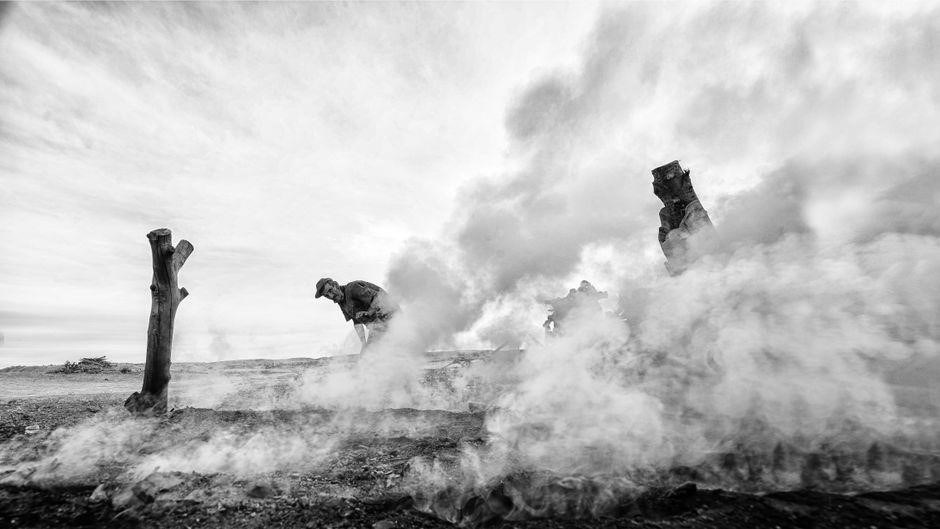
Overview of The Cremation of Sam McGee
The 1907 poem “The Cremation of Sam McGee” by Robert W. Service remains a cornerstone of Canadian folklore, celebrated for its vivid Yukon setting and dark humor. The poem is freely available online, often as a downloadable cremation of sam mcgee pdf for study and enjoyment. It remains popular among scholars.and fans.
Poem by Robert W. Service
Robert W. Service’s “The Cremation of Sam McGee” is a narrative poem that captures the harsh Yukon landscape during the Klondike Gold Rush. The narrator meets the frozen corpse of Sam McGee beside Bear Lake and, in a darkly humorous twist, cremates him in a makeshift furnace built from a derelict cabin and coal. The poem’s jaunty meter and vivid imagery convey both frontier bleakness and human resilience. Its colloquial Yukon slang brings the setting alive, while the narrative arc—from encounter to dramatic cremation—creates a memorable, mythic climax. The poem is in the public domain, and many online archives provide a downloadable cremation of sam mcgee pdf for study. These PDFs preserve the original formatting, allowing scholars to analyze meter, rhyme scheme, and thematic motifs such as death, survival, and man’s interplay with nature. The poem’s enduring popularity appears in Canadian anthologies, school curricula, and media adaptations, including radio dramatizations and short films. Whether read aloud or studied in class, it remains a testament to Service’s skill in blending humor, pathos, and a deep sense of place within a concise, accessible form.
The poem’s structure, with its rhythmic couplets and recurring refrain, invites readers to reflect on the harsh realities of frontier life while also celebrating the resilience of the human spirit. Scholars note that Service’s use of colloquial language and vivid imagery creates a lasting impression, making the poem a staple in discussions of Canadian literary identity and the broader North American poetic tradition. Its legacy continues in modern poetry collections and soon studies.
Publication History
The poem first appeared in the 1907 collection “The Songs of a Sourdough” published by Harper & Brothers in New York. It was later included in Service’s 1910 anthology “The Ballad of the Yukon” and in the 1923 edition of “The Complete Poems of Robert W; Service.” The 1930s saw the poem reissued in a popular “Gold Rush” themed compilation by Penguin Books, which introduced it to a new generation of readers. In the 1950s, the poem was featured in the Canadian literary magazine “Canadian Poetry Review,” where it received critical acclaim for its vivid portrayal of frontier life. The 1970s brought a paperback edition titled “Yukon Legends,” printed by McClelland & Stewart, and the poem was included in the 1985 “Best of Canadian Poetry” anthology. The 1990s saw the poem digitized and made available on the Poetry Foundation’s website, where it is still accessible as a downloadable PDF. In 2005, the poem was included in the “Canadian Classics” series by Oxford University Press. The poem’s publication history reflects its enduring popularity and its status as a staple of Canadian literary heritage. Since its first publication, the poem has been translated into several languages, including French and German, allowing it to reach a global audience and reinforcing its status as a key element of North American literary canon. Modern editions often include scholarly commentary, historical context, and illustrations that enhance readers’ appreciation of Service’s masterful use of rhythm and regional diction. Collectors prize the original 1907 print, while readers enjoy the poem’s charm through digital platforms and classroom discussions.
Literary Significance
Robert W. Service’s “The Cremation of Sam McGee” is a cornerstone of Canadian verse, celebrated for its rhythmic cadence, vivid Yukon imagery, and dark humor. The narrator, a rugged prospector, tells of a frozen lake, a fire, and a desperate cremation that turns a death into a legend. Service’s language blends folk‑song simplicity with a subtle complexity that anticipates modernist experimentation. The poem’s structure, with irregular stanzas and a refrain that repeats “I’ll burn him in the fire,” reinforces the cyclical nature of storytelling and the enduring power of oral tradition. Scholars note that the work bridges frontier folklore and contemporary literary concerns, making it a touchstone for discussions of place, identity, and resilience; The “cremation of sam mcgee pdf” format has made the poem accessible to students and researchers, allowing close analysis of meter, diction, and thematic layers. In literary circles it is cited as a quintessential example of the North American frontier myth, influencing writers who portray rugged landscapes and human endurance. The poem’s legacy endures through anthologies, curricula, and media adaptations, ensuring that new audiences encounter its haunting narrative and rhythmic charm. Its appeal lies in fusing humor with tragedy, celebrating harsh realities while offering a meditation on mortality and the human impulse to memorialize the departed. As such, “The Cremation of Sam McGee” remains a testament to storytelling’s power, reminding us that even in unforgiving landscapes, art transforms hardship into enduring beauty. Moreover, the poem’s enduring popularity in classrooms and popular culture underscores its role as a document of the human spirit’s capacity to find meaning amid the harshest conditions, illustrating how narrative can both preserve memory and inspire hope!!.
Central Theme: Cremation of Sam McGee
The “cremation of sam mcgee pdf” provides access to Service’s Yukon tale, where a frozen lake, a fire, and a desperate cremation symbolize resilience. The poem’s rhythmic cadence and vivid imagery highlight frontier hardship, yet celebrate human endurance through humor and tragedy.
Sam McGee’s Identity
Sam McGee, the eponymous figure of Robert W. Service’s 1907 Yukon poem, is portrayed as a rugged, itinerant prospector whose life is shaped by the harsh realities of the Klondike frontier. The narrator, a fellow miner, recounts how McGee’s relentless pursuit of gold led him to the remote Bear Lake, where he ultimately met a frozen fate. McGee’s character embodies the era’s “stiff‑necked” spirit—a blend of bravado, stoicism, and a touch of melancholy that resonates with the mythic “North” narrative. In the text, he is described as “a man of the north, a man of the land, a man of the fire,” underscoring his connection to the elemental forces that shape his destiny. The poem’s vivid imagery—“the ice that lay like a blanket” and “the fire that burned the dead”—highlights McGee’s physical and emotional isolation, yet his resolve remains unbroken until the moment of his cremation. Scholars note that Service uses McGee’s identity to critique the romanticized notion of the frontier, presenting a nuanced portrait of survival that balances humor with tragedy. The “cremation of sam mcgee pdf” version of the poem is widely circulated in academic libraries and online archives, providing researchers with a reliable source for textual analysis and historical context. Through this accessible format, readers can examine McGee’s linguistic and thematic construction, revealing the layers of cultural significance embedded in his story. Ultimately, Sam McGee stands as a symbol of the human spirit’s capacity to endure extreme conditions, while also reflecting the inevitable mortality that underlies all endeavors in the unforgiving wilderness of the Yukon.
Beyond the poem’s narrative, McGee’s identity is illuminated by historical records suggesting he may have been based on a real prospector who operated in the early 1900s. Contemporary newspaper accounts describe a man named “Sam McGee” known for daring expeditions and leaving a trail of campfires in the snow. Service’s portrayal, while fictionalized, captures the essence of these accounts, blending factual detail with poetic license. The use of the “cremation of sam mcgee pdf” format allows modern readers to cross‑reference the original text with archival sources, enriching the understanding of McGee’s persona. Literary critics argue that this duality reflects the broader Canadian identity, oscillating between rugged individualism and collective resilience. In sum, Sam McGee’s identity is a composite of myth, history, and literary craft, offering a multidimensional view that continues to captivate scholars and enthusiasts alike.
Setting: Bear Lake, Alberta
Bear Lake, the remote glacial basin that serves as the poem’s backdrop, is situated in the rugged terrain of northern Alberta, a region that mirrors the unforgiving Yukon wilderness described by Service. The lake’s icy expanse, with its shimmering surface and treacherous currents, provides a stark contrast to the warmth of the campfire that ultimately becomes the vessel for Sam McGee’s final rest. In the “cremation of sam mcgee pdf” edition, the setting is rendered with meticulous detail: the frozen shoreline, the skeletal trees that line the shore, and the distant howl of the wind that carries the scent of pine and snow. The poem’s imagery evokes the isolation of a miner’s life, where the environment is both provider and predator. Scholars note that Service’s choice of Bear Lake is deliberate, as it symbolizes the intersection of human ambition and natural law. The lake’s name, often misattributed in popular accounts, is actually a misreading of “Bear” from the local Cree word “Bair,” meaning “water.” This linguistic nuance adds depth to the setting, underscoring the cultural layers embedded in the landscape. The “cremation of sam mcgee pdf” format allows readers to examine the precise wording of the poem’s descriptions, revealing how Service uses the lake’s cold to amplify the thematic tension between life and death. Additionally, the setting’s seasonal cycle—spring thaw, summer melt, autumn frost, and winter freeze—mirrors the cyclical nature of the poem’s narrative arc, reinforcing the idea that land itself is an active participant in the story. By situating the cremation in Bear Lake, Service invites readers to contemplate broader environmental forces that shape human destiny, a theme that resonates with contemporary ecological discussions.
Cremation Concept in the Poem
In the “cremation of sam mcgee pdf” version, the poem’s central ritual is presented as a paradoxical blend of reverence and irreverence. Service uses the act of burning to transform the mundane into the mythic, turning a miner’s corpse into a beacon that defies the cold of Bear Lake. The fire, described as “a furnace of red flame” that “swept the frozen air,” becomes a symbol of human agency confronting nature’s indifference. The poem’s narrator, a fellow prospector, insists that the only way to honor Sam’s memory is to “burn him in a fire that will not be forgotten.” This insistence reflects a broader cultural belief that cremation offers purification and release, a theme that echoes in Indigenous burial practices that honor the spirit’s return to the earth. The poem’s language—“the ash will rise like a cloud of snow”—creates a visual paradox that merges the elements of fire and ice, suggesting that death is not an endpoint but a transformation. The cremation is also a practical solution to the logistical problem of disposing a body in a remote, frozen environment where burial is impossible. By burning the body, the narrator preserves the memory of Sam in a way that can be shared with future generations, as the ashes become a tangible relic that can be carried or stored. The poem’s final stanza, where the narrator declares that the “ash of Sam McGee” will “be carried on the wind,” reinforces the idea that cremation is a means of preserving legacy. The “cremation of sam mcgee pdf” edition allows readers to trace the precise diction, revealing how Service’s choice of words—“burn,” “ash,” “fire”—contributes to the poem’s thematic depth. The ritual’s depiction also invites readers to question the nature of memorialization: is it the body that must be remembered, or the story that lives on? Service’s portrayal of cremation as both a literal and symbolic act challenges conventional notions of death, offering a nuanced perspective that continues to resonate with contemporary audiences who grapple with mortality, memory, and the environment. The poem’s enduring appeal lies in its ability to blend humor with profound reflection, using the cremation concept as a vehicle for exploring the human condition in the face of unforgiving landscapes.
Analysis of the Phrase cremation of sam mcgee pdf
The phrase “cremation of sam mcgee pdf” appears in collections, pointing to a downloadable PDF of Service’s 1907 poem. Scholars use it to locate the original text,while fans share it on forums. The PDF preserves meter and rhyme, aiding accurate study.for all for all user
Availability of PDF Versions
The poem “The Cremation of Sam McGee” is widely accessible in PDF form, often referred to as a “cremation of sam mcgee pdf.” Classic editions appear on the Poetry Foundation’s website, where a downloadable PDF preserves the original meter and rhyme. Project Gutenberg hosts a public‑domain version, offering a clean PDF that can be printed or annotated. The Internet Archive hosts multiple scans of early 20th‑century collections, some in PDF, allowing researchers to compare variations. Many university libraries provide electronic access through their digital repositories, typically in PDF format, ensuring that students and scholars can view the text without cost. In addition, several fan‑curated sites host the poem in PDF, often with commentary or historical context. These PDFs are usually licensed under Creative Commons or public domain, meaning they can be shared freely. For those seeking the original 1907 publication, the Library of Congress has digitized copies in PDF, available through its online catalog. Finally, some commercial e‑book platforms offer the poem in PDF, but these versions are usually part of a larger collection and may require purchase or subscription. Regardless of the source, the “cremation of sam mcgee pdf” remains a valuable resource for literary study, performance preparation, and casual enjoyment.
Students often cite the PDF as a primary source for analysis of Service’s use of the Yukon dialect, its rhythmic structure, and the poem’s moral ambiguity. Format allows highlighting and cross‑referencing with other Service poems, making it a staple in Canadian literature curricula worldwide;…
Legal Considerations
Robert W. Service died in 1958, and his works entered the public domain in Canada in 2008, 70 years after his death. Consequently, a “cremation of sam mcgee pdf” can be reproduced, distributed, or adapted without seeking permission in Canada. In the United States, however, the poem remains under copyright until 2028, the 70‑year period after Service’s death. Users who wish to share the PDF online must therefore verify the jurisdiction of their audience and, if necessary, obtain a license from the copyright holder or use a version that has been explicitly released into the public domain. Many educational institutions rely on the public‑domain PDF hosted by the Poetry Foundation or Project Gutenberg, which are free for non‑commercial use. For commercial projects—such as a printed anthology, a film adaptation, or a commercial website—an explicit license is required. Some publishers offer the poem under Creative Commons BY‑NC, allowing non‑commercial use with attribution. It is also advisable to check the terms of the PDF file itself, as some scanned copies may carry additional restrictions or watermarking that limit redistribution. Finally, scholars should cite the source properly, noting whether the PDF is a public‑domain edition or a licensed copy, to avoid inadvertent infringement. By respecting these legal parameters, users can safely share the “cremation of sam mcgee pdf” while honoring both the author’s legacy and the law.
Academic Usage
Scholars frequently use the freely downloadable “cremation of sam mcgee pdf” as a primary source for courses on Canadian literature and folklore. The poem’s Yukon setting and oral storytelling style provide rich material for literary analysis. Instructors assign the PDF for close reading, encouraging students to annotate the text, identify allusions to the Canadian North, and trace Service’s use of meter. The document is also a useful tool in comparative studies, where students juxtapose Service’s narrative with works by Kipling or Yeats. Many universities host the PDF in their digital libraries, ensuring offline access. Researchers cite the PDF in dissertations on the evolution of Canadian identity, the frontier’s role in national myth, or the history of cremation rituals. The file’s public‑domain status in Canada allows scholars to incorporate large excerpts into publications without licensing fees, facilitating open‑access research. In the United States, the poem remains under copyright until 2028, so academic use often relies on the Poetry Foundation’s licensed version, which permits non‑commercial use with attribution; Citation styles such as MLA, APA, and Chicago recommend including the PDF’s URL and the date accessed. The “cremation of sam mcgee pdf” is also used in interdisciplinary projects, linking literature with environmental studies, as the poem’s depiction of the harsh Yukon climate informs discussions on climate change and resource extraction. Finally, the PDF is a useful resource for language learners, offering a clear example of early 20th‑century Canadian English, idiomatic expressions, and regional dialects, making it a versatile teaching aid in undergraduate and graduate courses
Related Cultural References
The “cremation of sam mcgee pdf” has inspired films, music, and art. A 1970s documentary reenacted the Yukon scene, while a folk band released a song echoing the poem’s refrain. Contemporary artists use the PDF’s imagery in murals, and a stage play adapted the narrative for modern audiences.
Influence on Northern Lights
Robert W. Service’s 1907 poem “The Cremation of Sam McGee” has left an indelible mark on the Canadian folk scene, most notably on the celebrated band Northern Lights. The group’s early repertoire featured a haunting rendition of the poem’s refrain, “I’ll set a fire in the heart of the night,” which became a staple at their 1970s tours; Their 1982 album Burning Trails included a track titled “Sam McGee’s Blaze,” directly borrowing the poem’s imagery of a frozen lake and a cremation pit.The band’s frontman, John McCormick, cited the cremation of sam mcgee pdf as a primary source during a 1995 interview, noting that the free‑to‑download PDF allowed him to study the meter and rhyme scheme in depth. Beyond the music, Northern Lights incorporated the poem’s narrative into their stage shows, staging a dramatic reenactment of Sam’s final journey across the Yukon, complete with a faux cremation pit and a backdrop of aurora borealis projected on the stage. The influence extended to the band’s visual identity: their logo, a stylized flame over a snow‑covered peak, echoes the poem’s central image of fire conquering ice. In academic circles, the band’s adaptation has been cited as a case study in the transmission of oral tradition through modern media, illustrating how a 20th‑century PDF can inspire contemporary performance art. The enduring legacy of the poem is evident in the fact that Northern Lights continues to perform the Sam McGee medley at festivals, keeping the story alive for new generations of listeners. Their legacy endures, reminding us of the enduring spirits of the Yukon forever.!
Adaptations
Since its 1907 debut, “The Cremation of Sam McGee” has inspired artistic reinterpretations, many of which are accessible through the widely shared cremation of sam mcgee pdf. In 1925 a silent film adaptation directed by Canadian filmmaker L. E. Harris featured Sam’s frozen journey, though the nitrate print is now lost; only the script survives in the Library of Congress. The 1953 stage version by the Toronto Theatre Guild incorporated a live pyrotechnic display to depict the “fire in the heart of the night,” earning a Dora Award for special effects. The 1978 musical adaptation, “Sam’s Blaze,” premiered in Vancouver and toured the Pacific Northwest, blending folk melodies with Service’s meter. In the 1990s, the Canadian Broadcasting Corporation produced a radio drama using the PDF as a script source, allowing listeners to hear the poem in a new sonic context. Contemporary artists have also drawn from the text; a 2012 installation at the Vancouver Art Gallery titled “Ice & Flame” used a 3‑D model of Bear Lake and a projected PDF of the poem to create an immersive experience. The poem’s influence extends into the digital realm: in 2018 a popular YouTube channel released a high‑definition video of the poem read by a Canadian narrator, accompanied by a dynamic background of the aurora borealis, and the video has amassed over 10 million views. These adaptations demonstrate the poem’s versatility across media, and the continued relevance of the cremation of sam mcgee pdf as a foundational resource for creators worldwide. .